Magazine · · 2 min read
Software that stays: building products without an expiry date
Most software is built for the moment — the demo, the funding round, the sale. We build for year three. What that means in concrete decisions.
The uncomfortable question first
Before any product, we ask a question that has nothing to do with technology: do we want to look after this in five years? If the honest answer is no, it does not get built — however good the opportunity looks. Software is not a building that gets finished. It is closer to a garden: what nobody enjoys tending goes wild, visibly.
Almost everything else follows from that one question. Whoever builds for years chooses differently what to begin — and differently what to build it with.
Dependencies are other people's promises
Every library, framework and third-party service is a promise someone else has to keep: that it stays maintained, that updates break nothing, that the service is not discontinued or repriced. Some of these promises are worth taking. Most are not — they save a week at the start and cost one every year after.
What we cannot afford is not the library — it is its upkeep across a decade.
Our products are therefore deliberately poor in dependencies: static HTML, our own CSS, our own JavaScript, a generator built on the standard library. What we cannot afford is not the library — it is its upkeep across a decade.
Slow start, fast operation
This way of building shifts cost to the front. Building your own calculator, your own map, your own counter takes longer than embedding the ready-made. In operation the balance tips: no subscriptions that grow with you, no third-party outages that become your own, no rework because a provider changed its interface.
And there is an effect that only shows with the second product: what was built once belongs to the house. The first product's counter counts for the third; the generator of the first builds the fourth. Every product starts where the previous one arrived.
How you can tell
Whether software is built to stay shows from the outside: it loads fast, because nothing superfluous comes along. It works the same next year, because nothing crumbles beneath it. Its legal pages describe what actually happens, because little happens. And it never needs to announce anything — what is finished sits in the portfolio, what is not sits nowhere.
Next
This is how we work — and what comes of it.
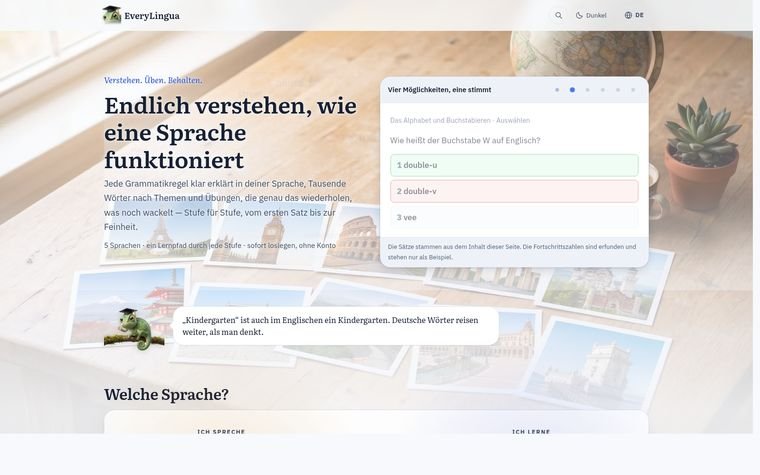
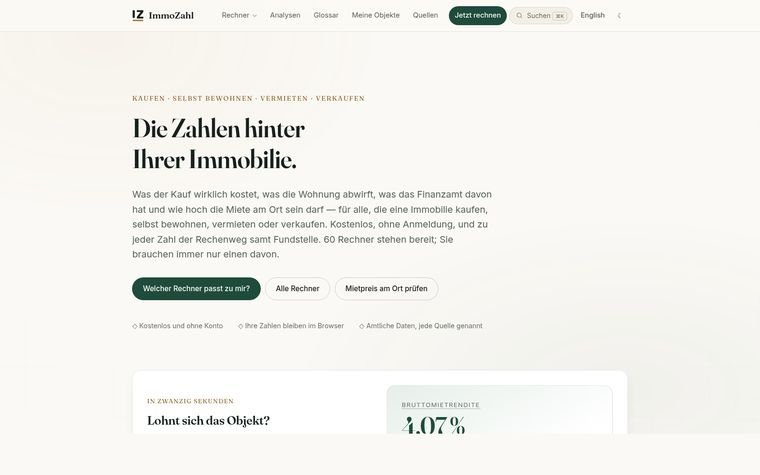
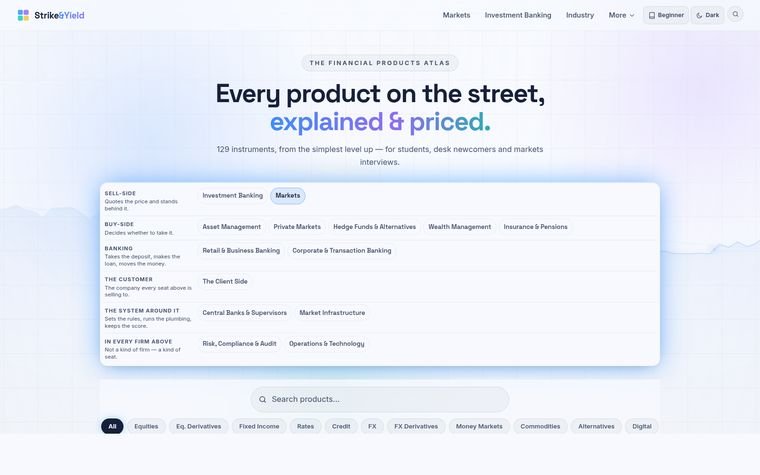
What this text describes sits inside every product under this roof. Looking beats reading on.
Exactly this is inside:



More articles
Citizenship test in Germany: how many questions, how many right?
33 questions, 60 minutes, a pass from 17 correct answers. What sits behind these three numbers, where the questions come from — and why the whole test can be learned in advance.
Read the articleGerman recreational boat licence (sea): questions and pass marks
30 of 285 questions, 60 minutes, two parts scored separately. Why the spread of your mistakes matters more than their number — and what comes on top of the theory exam.
Read the articleThe English simple present, explained for German speakers
The basic present tense in English has exactly one trap: the third person singular. When the simple present is used, how questions and negatives are built — and why the -s feels so illogical.
Read the article